Fleet Digitalization
Battery Health Monitoring for Electric Machinery Fleets
Battery health monitoring turns charging events, voltage trends and workshop history into practical information for managing electric machinery fleets.
6 min read
B’Smart Ignition / Fleet Digitalization
How backup tracking, geofences and time-based rules can help detect unusual movements and support a clear response protocol.
B’SMART INSIGHTS · INDUSTRY & TECHNOLOGY
Anti-Theft Protection for Machinery Fleets: Backup Tracking, Geofences and Time Rules
Primary telematics, backup tracking, geofences and time-based alerts can be combined into layered protection. It improves the speed and quality of verification but does not eliminate risk.
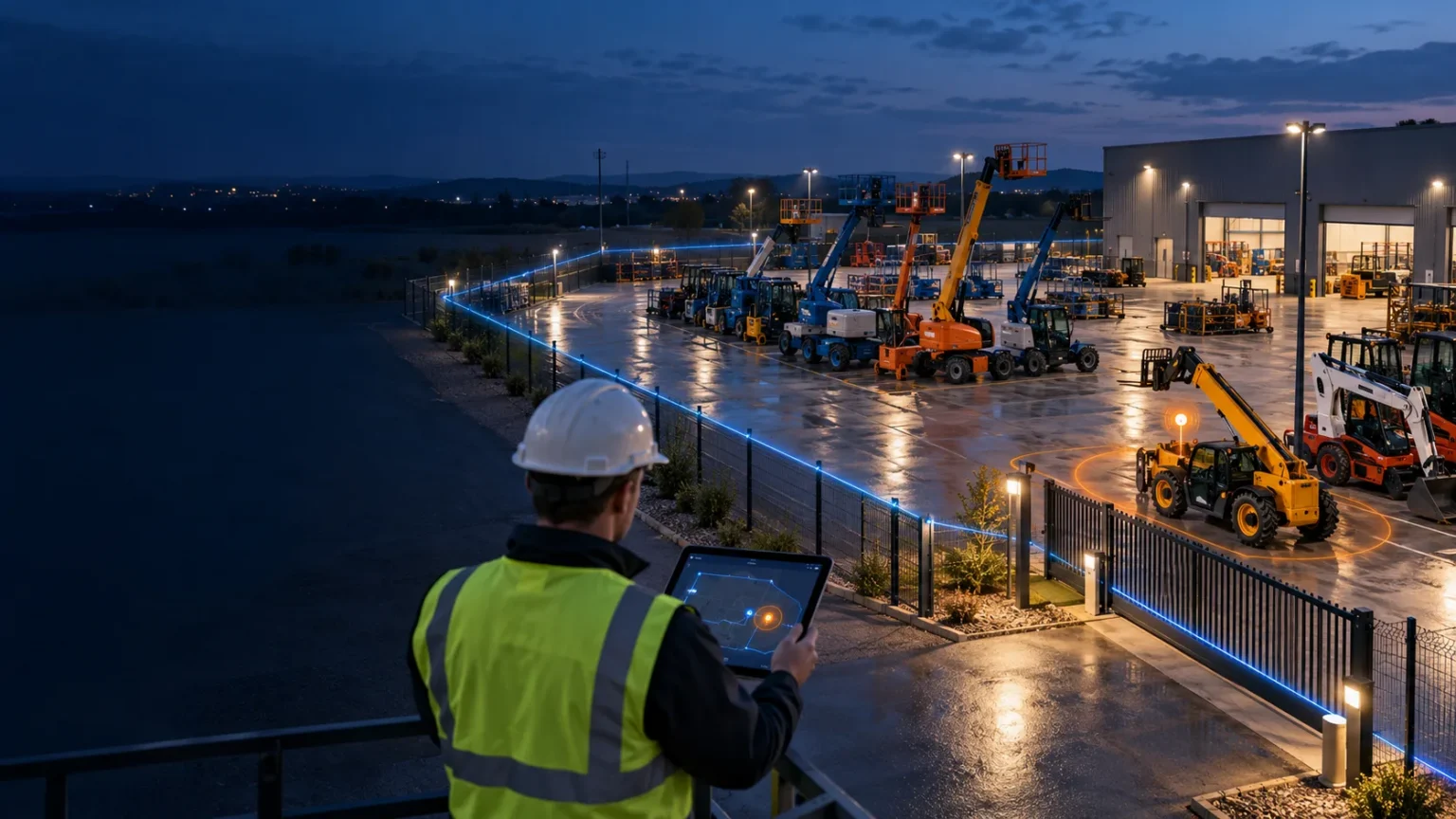
Anti-theft protection for machinery fleets does not begin when an asset disappears. It starts before that point, when the location, schedule and status of each machine are turned into operating rules. These rules make unusual situations easier to detect and support a clear response protocol. Combining primary telematics, backup tracking, geofences and time-based alerts creates layered protection. It does not eliminate risk or turn every alert into proof of theft, but it can improve the speed and quality of verification.
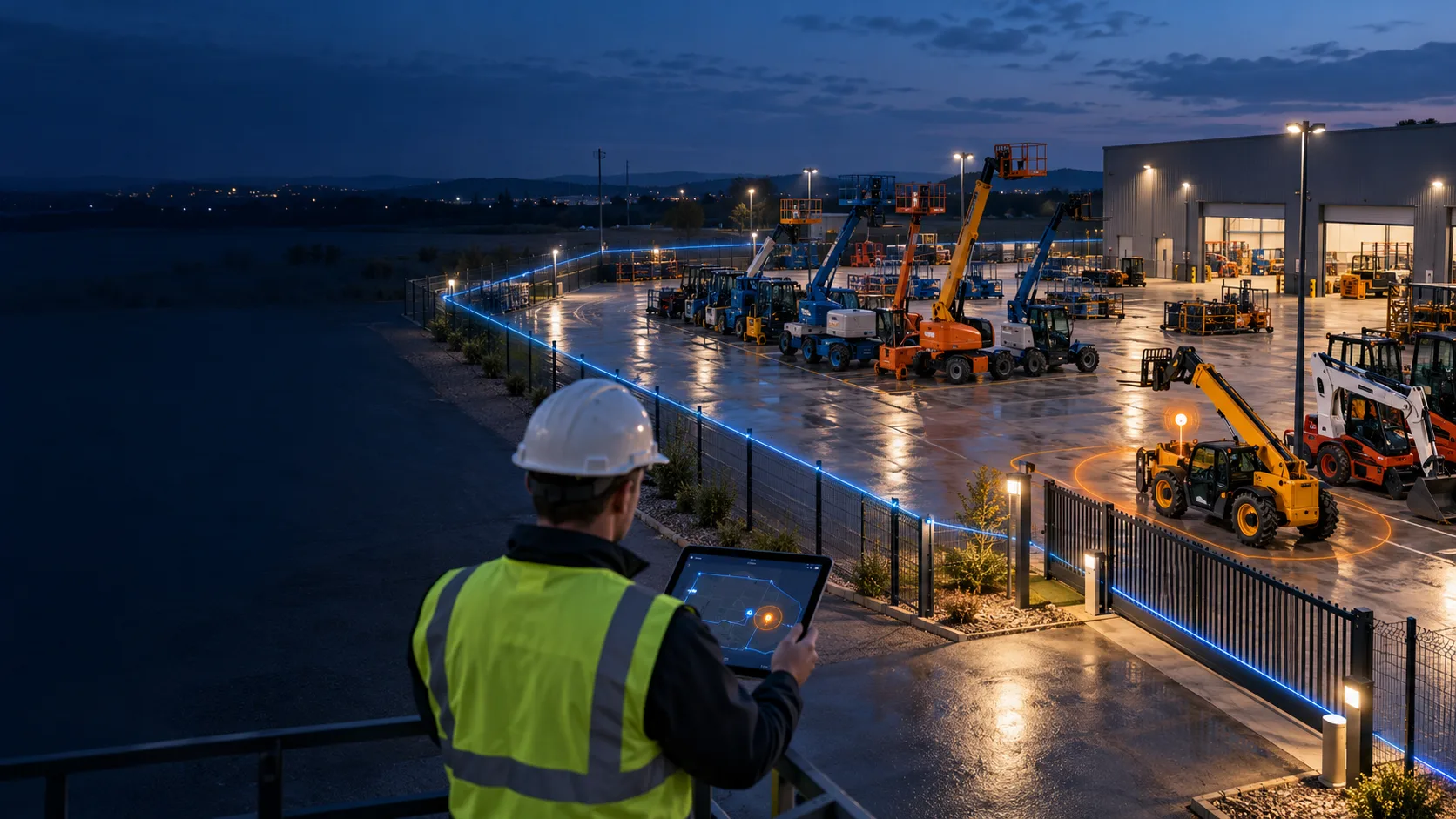
Seeing a machine’s last known position is useful, but on its own it is not an operational security system. A map shows where an asset is. An anti-theft strategy defines which movements are authorised, when they should occur, who receives each alert and what checks should follow.
In a rental or construction fleet, the same signal can mean different things. A night-time movement could be a planned collection, a maintenance operation or an incident.
An alert should therefore be treated as an event requiring verification, not as an automatic conclusion.
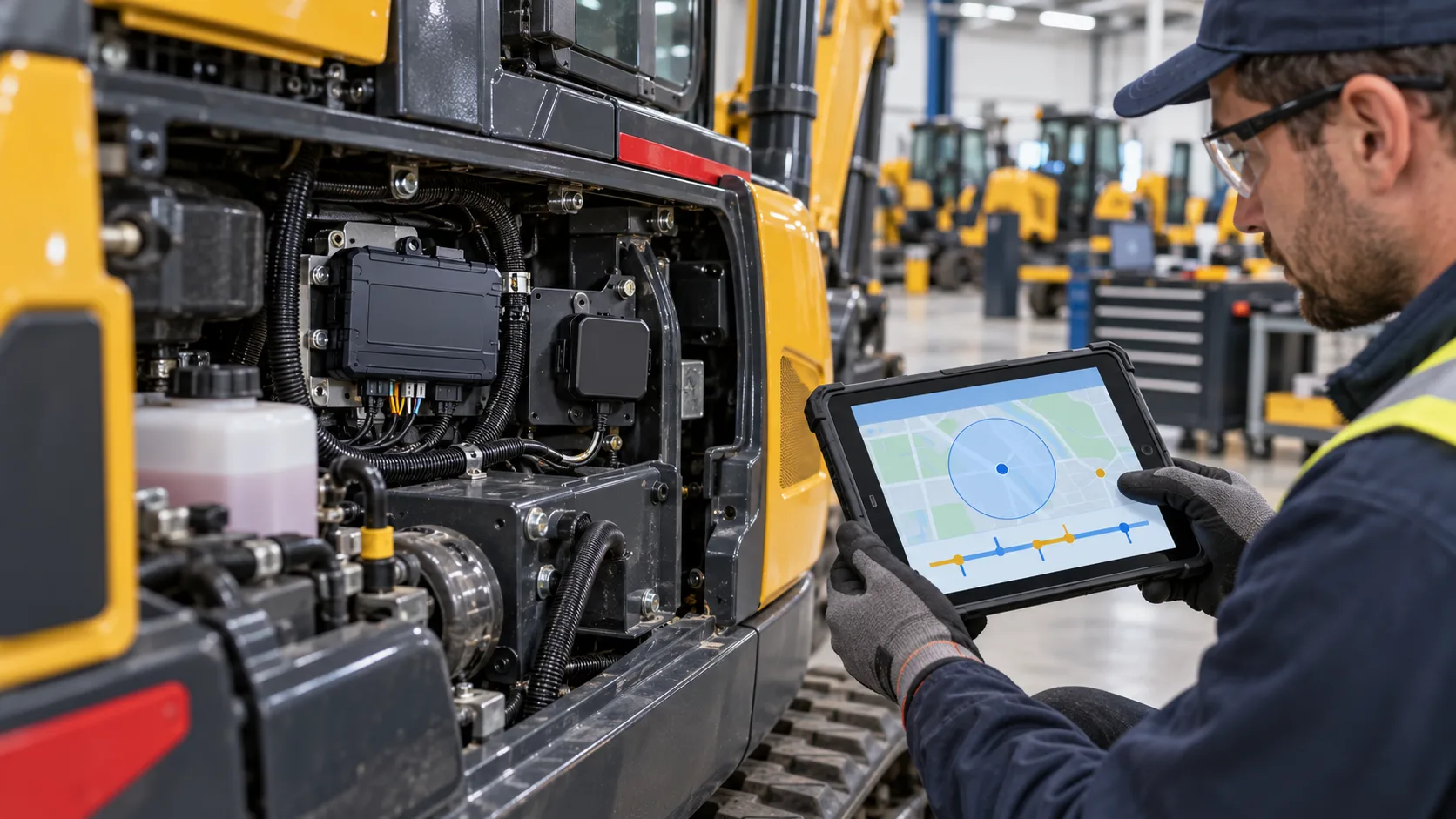
The first layer is usually the primary telematics device. It is integrated into daily operations and records location along with other available data. The second layer is an independent backup tracking system. Its purpose is not to duplicate every data point. It provides another locating channel if the main equipment stops communicating, loses power or is tampered with.
B’Smart states that its platform supports tracking through GPS, LBS and Wi-Fi, together with backup options. How useful this is in practice depends on configuration, coverage, installation and machine type. No device guarantees the recovery of an asset. The value lies in reducing single points of failure and including loss of communication in the review protocol.
A geofence is a virtual perimeter tied to an authorised location, such as a depot, workshop, jobsite or delivery area. When a machine enters or leaves that perimeter, the platform can generate an event. The fleet manager can then work by exception instead of checking maps manually.
To be useful, a geofence must reflect operational reality. A perimeter that is too narrow may trigger notifications because of positioning variation. One that is too broad may delay detection. It also helps to distinguish between an authorised exit, an unexpected entry and time spent outside a zone. Each rule should state why the alert was raised and what action is expected.
Time changes the meaning of movement. A departure early on a working day may be normal activity, while the same event during an unauthorised period deserves a check. Depending on the organisation, time-based rules can define operating windows by machine, asset type, branch or project.
The aim is not to send more notifications, but to produce fewer and more relevant alerts.
For example, a rule could prioritise out-of-hours movement only when it coincides with a machine leaving a geofence. Another could increase severity if the main device stops communicating while the backup detects a change of position.
A useful alert supports a decision without forcing the recipient to rebuild the context. At a minimum, it should include:
The escalation chain should be simple. First, compare the event with planned work orders, deliveries or collections. Next, seek validation from the person responsible for the operation. If there is no authorised explanation, activate the company’s defined internal procedure.
Not every machine needs the same rules. Consider mobility, use, exposure, ease of transport and idle periods. This classification helps determine where backup tracking makes sense and what alert level each asset requires.
Geofences and schedules should come from real processes, not assumptions. Document regular depots, workshops and work areas, together with known exceptions. Assign a review date so rules do not become outdated.
A branch manager may need alerts for their own area, while a central team may receive only critical incidents. Role-based segmentation avoids overload and protects sensitive information.
Define who verifies the alert, which sources they consult, when they escalate and how they record the outcome. If compatible equipment supports start inhibition or remote stopping, its use must be limited to safe, authorised conditions covered by the manufacturer’s guidance and applicable regulations.
Track how many alerts turn out to be authorised operations, which require intervention and where delays occur. The objective is to improve the process, not to claim a recovery rate or savings that technology alone cannot promise.
A platform may state that it provides geofences, time-based rules, hierarchical alarms, installation or disconnection notifications and backup tracking. These are technical capabilities. Their outcome depends on operational factors: correct installation, power, coverage, permissions, data quality, rule maintenance and human response.
It is equally important to separate prevention from investigation. Alerts help detect and document events, but they do not establish a person’s intent by themselves. The protocol should respect privacy, restrict access by role and retain only the information required under applicable obligations.
Anti-theft protection for machinery fleets works best when it is part of day-to-day management. Each layer plays a distinct role:
Together, they create a stronger basis for detecting, verifying and escalating incidents.
The next step is not to activate every possible alarm, but to design a small set of rules aligned with real operations. To assess how this approach could be applied to your fleet, explore B’Smart solutions, review the available features or contact the team to discuss a controlled pilot.
Fleet Digitalization
Battery health monitoring turns charging events, voltage trends and workshop history into practical information for managing electric machinery fleets.
Fleet Digitalization
Discover how telematics, predictive maintenance and streamlined operations can improve the availability and profitability of your rental fleet.
B’Smart IoT
Discover which data you need to anticipate breakdowns and improve your machinery availability.